Recently, Amanda was featured on the Language of Leadership Podcast with host Mark Iorio.
Click here to watch!
Latest Updates, Trends and Topics
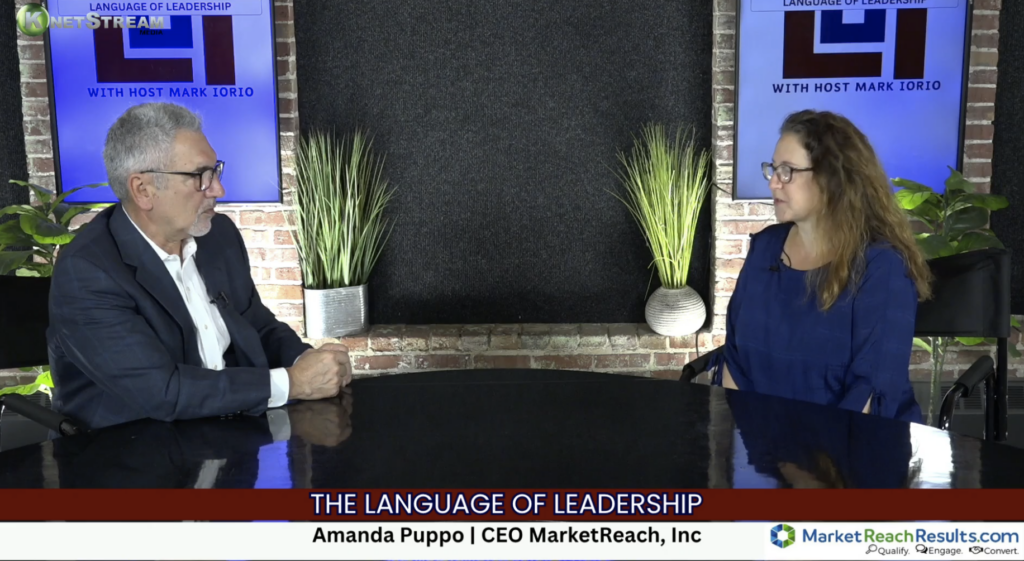
Recently, Amanda was featured on the Language of Leadership Podcast with host Mark Iorio.
Click here to watch!
Most companies struggle with B2B sales prospecting not because they lack effort—but because they lack a consistent, proven approach.
After 25 years of delivering appointment setting, lead generation, and outbound sales programs, we’ve seen what actually drives results—and what wastes time. From cold calling and qualification to follow-up and modern tools like AI, these lessons are built from real campaigns and real conversations with decision-makers.
If your goal is to book more qualified meetings, improve conversion rates, and build a predictable sales pipeline, this is your playbook.
(more…)
If you rely on B2B lead generation as a business then you’re not alone. 85% of businesses engaging in B2B marketing say that lead generation is their top goal with content marketing.
Simply put, B2B lead generation is important.
There is no end to the list of strategies available to business owners to get more leads. From visiting trade shows, to leveraging digital marketing, and even buying leads – it can be hard to sort through all of your options to choose the best combination for you.
There is an art and a science to generating high-quality leads that will eventually convert into clients. Whether you choose to generate leads from social, trade shows, or other methods, here are a few B2B lead generation tips to help you pump up your efforts.
To start, let’s talk about buying contact lists:
(more…)
As seen on Insurance Journal, written by Amanda Puppo of MarketReach Inc.
The work-from-home environment is the ultimate test in staying on top of prospects. Unnurtured relationships can easily fade, or you can take this as an opportunity to put your best foot forward. One thing we know for sure is that everything has changed since the COVID pandemic. However, the need for insurance has not. That yearly renewal is happening no matter what. Opportunity awaits when you follow these tips to stay on top of prospects!
Gatekeepers have one job as it relates to receiving sales calls – they are expected to screen out calls that may be deemed as not deserving of their boss’s time. For this reason, it’s not shocking when you make a phone call and get shooed away. Yet, insurance does require discussion at least once a year, and either they will renew or switch. There are few topics that are difficult to cold-call for, but there are two things we know for sure:
Producers have the power to make a difference in gatekeeper responses by building rapport and demonstrating empathy.
Making warm calls over cold calls wins every time.
When you call, be sure to show the person on the other line that there is a name, a face and a real human behind the call. Use cues from the gatekeeper, such as tone and pace, to build some commonalities. If there is a timely light-hearted topic (upcoming holiday, weather event, etc.), use it before rushing into a sales pitch or asking for important information. Did you ask them their name on a prior call to utilize it on the next call? Use a script to cover all of your qualifying questions, but mostly be (your best) authentic self.
After a strenuous year, empathy has become essential. Prospecting by phone does not have to be robotically transactional. According to Hubspot, 69% of consumers said a positive sales experience begins with a representative listening to their needs. Another 61% emphasized the idea of not being too pushy. It is essential to listen to your prospect carefully and deliberately in the answers they give and explain how your value-proposition benefits them. If you have historically been a “quote shop generalist” – this may be an opportunity to rethink your value proposition by industry. Consider how you can use your expertise to be thought of as a “trusted advisor” through consultative selling. This means asking the right questions and demonstrating your understanding of their type of business and industry. By building rapport, being empathetic and asking solid questions to understand needs, you can connect to prospects on a deeper level. In turn, your company can develop long time customers and gain referrals.
Closing a sale requires more than just one good conversation. A relationship is excellent on the surface, but if the prospect is not a qualified opportunity for your company, it will not result in a profitable sale. Some groups only pay commission past the first year to commissions over $2,000, for example. So, if you’re going to spend your time, you may want to do so in the larger commissioned opportunities. To delve deeper, your company should first determine whether current qualification factors make sense in light of the pandemic and reduced workforces. Various industries had to pivot, including your prospects’ businesses. By requalifying, you do not waste time and resources targeting your marketing and sales efforts to the wrong organizations.
Your qualifying questions may include decision-make name and staff size (since we can’t ask the receptionist what premium they’re paying or what their MOD is). These qualifying questions answered make the next call show that you are ‘researched’ and you may have an easier time getting in the door – thusly – creating the warm call. A well-researched prospect will make your next phone call better and establish credibility.
Research requires both qualification phone calls and the internet. Both are important and should be used in tandem to determine whether a prospect is the right fit. Talking on the phone with a gatekeeper can give you the tiniest bits of information, from makeup and structure of the company to how many trucks they have, staff size and even an upcoming vacation for your decision-maker. When researching online, be sure to check out the company’s website (the “about us” and leadership page, especially) along with their LinkedIn pages, where you can find information about decision-makers, size of business and further contact information such as email. See if they have any statements about COVID-19 and their current situation. However, do not fall into a Google research tornado. Look for the key points quickly, know when to reach out by phone and know when to move on to the next prospect.
‘After a strenuous year, empathy has become essential. Prospecting by phone does not have to be robotically transactional.’
Research not only allows you to qualify, but it also helps with our first point, building rapport. It will show the prospect you spent the time to get to know the company and make a unique connection with them!
Now that you have built a foundation and researched your prospect, it’s imperative to stay fresh in their minds. Though the prospect only renews their insurance once per year, subtle brand awareness throughout the year will allow your name to become recognizable once it is time to give them a ring.
How do we continue to let automation allow us to stay top of mind with our prospects? Consider the use of email along with each sales call, as well as an automated email newsletter once a month and direct mail on occasion. An email gives the decision-maker the path to gain more access to your company through links and calls to action. Even better, email marketing statistically measures its efficacy, so you can understand if it works for your target market. Retention Science has shown that using a decision-maker’s first name in the subject line will make them more likely to open the email.
Dale Carnegie said, “A person’s name is to him or her the sweetest and most important sound in any language.”
Not all prospects are created equal. In B2B, staff size minimums, decision-maker titles and names can be a baseline of data points that require confirmation to determine if the company is worth pursuing. The goal is to confirm and validate information on that first call.
The ability to quickly develop initial rapport during a qualification call can lead to more successful sales opportunities as the process moves along. Being able to create a comfortable environment for conversation, where the guard goes down, will allow for results to be achieved. Finding out information about a potential target before they answer the phone, is vital. It determines whether or not a company is eligible to pursue, resulting in the proper allocation of sales team labor. It is very expensive for marketing to produce unqualified prospects, and then for the sales team to not recognize this until weeks of time and energy were expended chasing the wrong people or companies! Let’s take a look into how to identify a pursuable prospect, and then how rapport is built throughout the interaction.
Without an organized client relationship management (CRM) system, prospect qualification, lead generation, and every stage of the sales cycle would be complete chaos. This is especially true if you have multiple lead generators or sales reps working those same records. It’s important for there to be a way to streamline and organize the data collected during each stage of the sales cycle.
Having a CRM system in place is a great way to stay organized, make sure you are reaching the right prospects, capitalize on prior intelligence gathered, and make sure salespeople are not calling the same prospects simultaneously. Lastly, prospects will still remain even if the sales rep leaves. Don’t let the prospect notes disappear along with the rep! If you don’t already have a CRM system in place, consider the benefits that come with having one:
(more…)
Have you ever made it far along in the sales cycle with a prospect and then, just when you are about to close the deal, all communication stops? When a prospect ghosts you, it can be frustrating, leaving you wondering what you did wrong and what you could’ve done differently. However, just because communication has stopped doesn’t mean that you won’t ever hear from them again – there can be many reasons for the “ghosting,” and if you had a good feeling about an ultimate sale, the ghosting could simply be due to bad timing. Consider these suggestions for what to do when a prospect ghosts you:
(more…)
Time management is an important skill that all salespeople should learn how to master and key performance indicators are a great way to measure how well your salespeople manage their time. The most important KPI that you might use to measure performance is the number of sales each salesperson makes in a week or month. While this can certainly be helpful in determining how “good” your salespeople are at selling, it is also important to consider the quality of each of these sales along with the interactions that come before it. Sometimes it is better to make fewer substantial sales than many small ones that are underqualified or require. With the help of good time management skills, your salespeople can…
(more…)
When it comes to developing and qualifying prospect lists, the ultimate goal is to identify high quality targets who have the potential to convert into customers. Both speed and accuracy are important during this process, but should one be prioritized over the other?
Even though it sounds ideal to have an extensive list of prospects, you also want to make sure that you are reaching the right people – that you have accurate names of decision makers and their titles, validated emails, phone numbers, addresses and company descriptions. Obtaining these items is most certainly time-consuming. So how do we justify our time commitment in cleaning up our prospect records (i.e. maintaining a clean CRM)? Consider the following advantages and disadvantages of both speed and accuracy during the prospect list development process and check out our conclusion on which is more important: (more…)
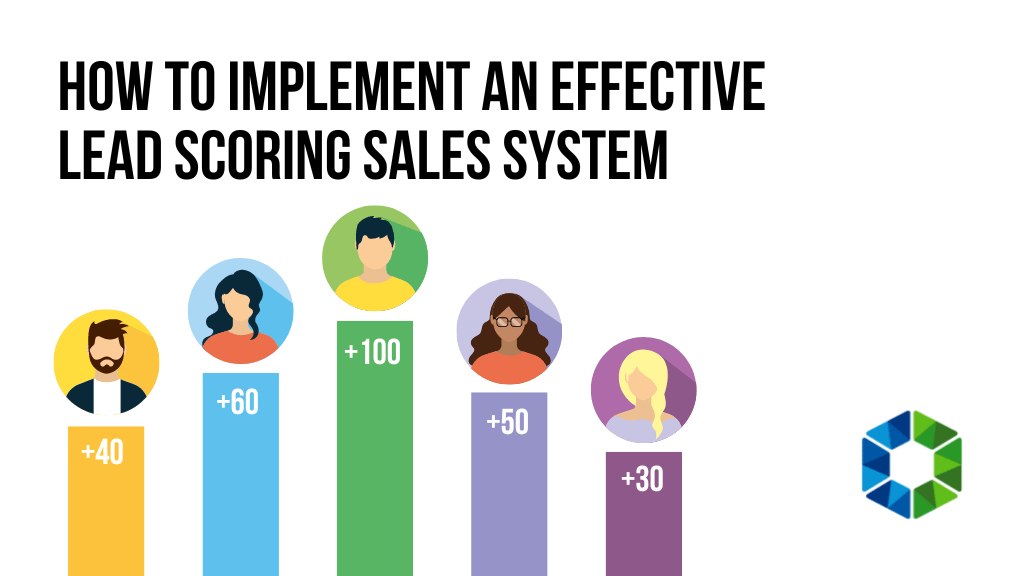
Lead scoring is a methodology that is shared between both Marketing and Sales that determines a lead’s sales-readiness. The process ultimately creates a list of leads that are compared and ranked based on which are most ready to purchase, also known as the “hottest leads”. The rank is assessed by the Marketing team and, when appropriate, turned over to the Sales team to engage the lead. Walk away from this article with at least this one action item: Rate each prospect A, B, or C for better segmenting in the way they are given attention.
The basics of lead scoring compares explicit and implicit information, as well as active and latent behavior. Explicit data refers to the information about the physical company you are prospecting, and can be broken down into two categories: firmographic and demographic. Firmographic information consists of the company’s location, the industry they are in, the number of employees they have, and other things about the company. Demographic information measures how the prospect fits your targeted audience by investigating specific job title or role, purchasing power, and the years of experience. On the other hand, and according to Nurture, implicit information analyzes the behavior of your prospects. This can be extracted through their actions, so if your prospect has registered for a webinar or your newsletter, it shows they may be interested. If your prospect has unsubscribed from your email, however, that would show they are not interested. (more…)